
Natural & Organic
Lotus Seed Shell
Gvider – Professional lotus seed shell supplier from China
Gvider Lotus Seed Shell
Lotus Seed Shell We Supply
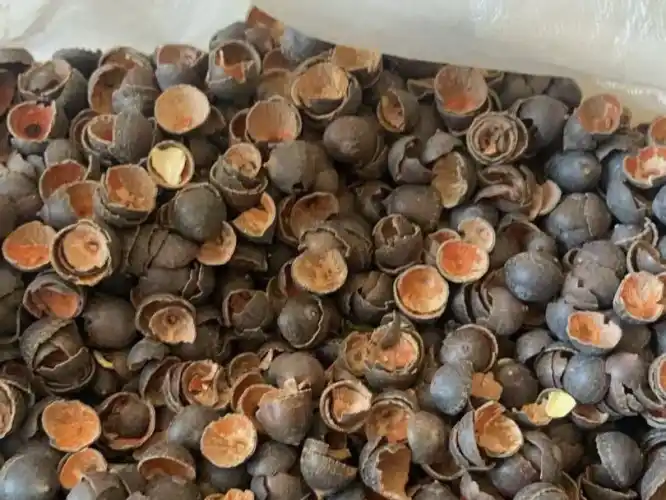
Dried Lotus Seed Shell
Color: Dark brown to blackish brown
Size: Length 1.5–2.5 cm, Width 1.2–1.7 cm
Thickness: 0.92–1.10 mm
Ultimate FAQ Guide to Lotus Seed Shell
What is lotus seed shell mainly used for?
Lotus seed shell is widely used for biomass fuel, animal feed additives, organic fertilizer raw materials, handicraft carving, and natural extraction of antioxidants. It is also applied in environmental protection materials and industrial filling due to its high fiber and lignin content.
What moisture content can you guarantee?
Our dried lotus seed shell has a moisture content controlled within ≤12%, which effectively prevents mold and decay during long-distance sea shipping and storage, ensuring stable product quality.
Is lotus seed shell eco-friendly and biodegradable?
Yes. It is a natural agricultural byproduct, 100% biodegradable, non-toxic, and pollution-free. It is widely recognized as a green raw material for biomass energy, organic compost and eco-friendly manufacturing.
What is the packaging?
Standard packaging is 25kg / 50kg PP woven bags. We also offer jumbo bags.
What is the shelf life of lotus seed shell?
Under dry, ventilated and shaded storage conditions, the shelf life is 12–18 months. Avoid damp and high-temperature environments to maintain its physical structure and performance stability.
Can you provide free samples?
Yes, free small samples are available for quality testing. Customers only need to bear the international shipping cost. Samples help you verify appearance, dryness, particle size and purity before bulk order.
How to remove lotus seed shell?
Industrial customers usually use mechanical dehulling machines for mass production. For small-batch processing, you can also gently break the shell by hand or with pliers.
For whole dried lotus seeds, soak them in clean water for 4–8 hours to soften the shell first. Then use a manual or electric sheller to crack and peel the outer shell efficiently. Soaking significantly improves peeling efficiency and keeps the kernels intact.
